

The Protein Craze: Do We Actually Need to Eat More After 40?
Or did protein just become the newest thing we're supposed to worry about?
Protein is everywhere right now. Protein coffee. Protein cereal. Protein pancakes. Protein bars. Protein chips.
It's hard to open Instagram without someone telling you that you need 100 grams a day. Then someone else says 120. Then there's a woman eating 150 grams and showing you how to sneak protein powder into foods that never asked for it.
And suddenly you're looking at your breakfast thinking: am I doing this wrong too?
So let's talk about protein after 40 without turning it into another diet. Because yes, protein matters — but that doesn't mean every woman over 40 needs to eat like she's training for a bodybuilding competition.
⸻
Why Does Protein Matter More As We Get Older?
One of the things we want to protect as we age is muscle. We naturally tend to lose muscle as we get older, and menopause makes paying attention to muscle and bone health increasingly important.
But muscle isn't just about looking toned. It's what lets you carry the groceries, climb the stairs, pick up your kids or grandkids, haul a suitcase through the airport, get up off the floor, keep your balance, and go about everyday things without thinking twice about them.
Your body needs protein to maintain and repair muscle, and it uses protein throughout the body for tissues, enzymes, immune function, and a long list of other jobs. So yes, protein deserves our attention as we get older. But here's where I think the conversation goes a little off the rails.
⸻
Do We Really Need 100–150 Grams of Protein Every Day?
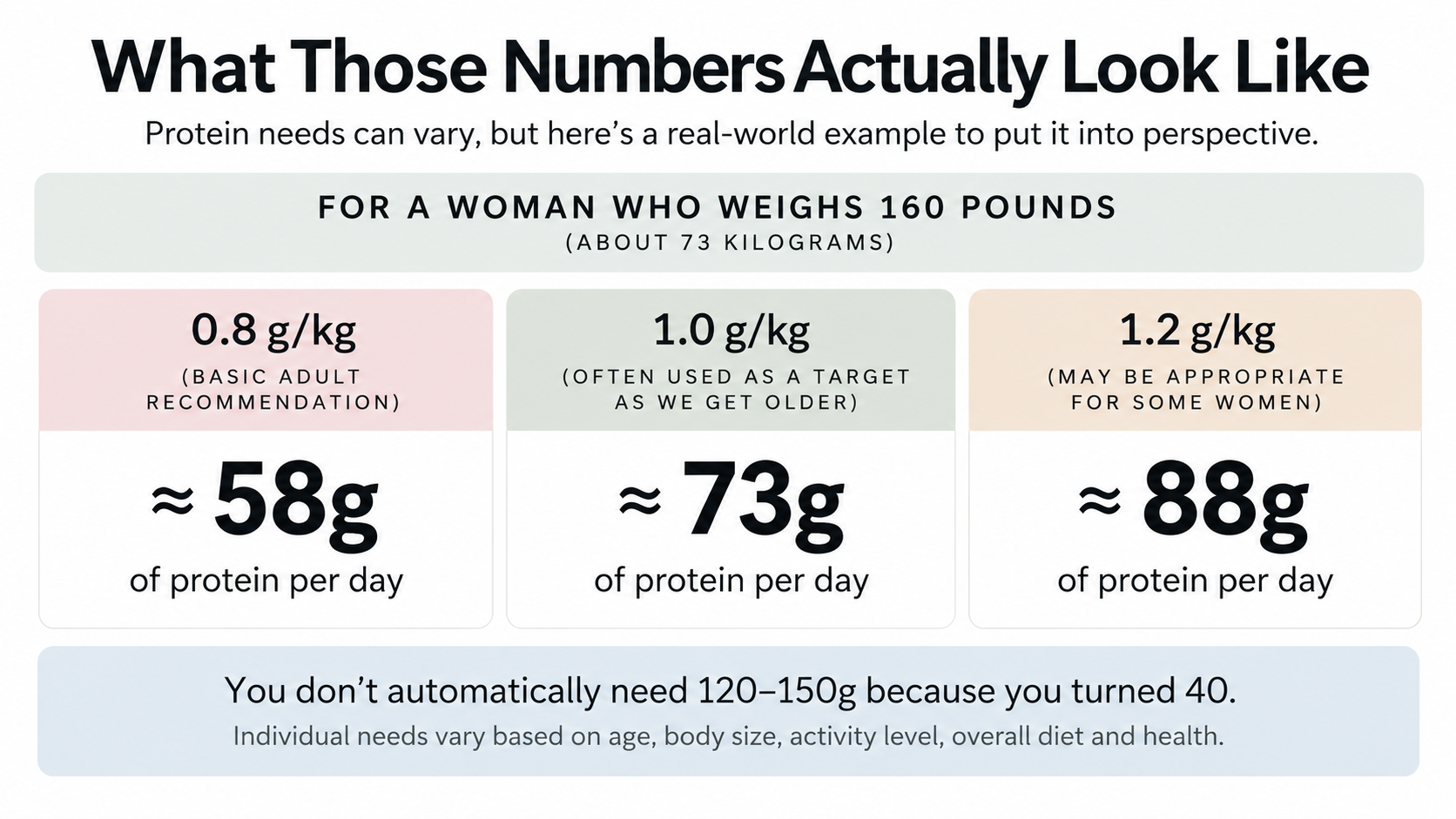
Not necessarily. The basic Recommended Dietary Allowance for healthy adults is about 0.8 grams of protein per kilogram of body weight per day. As people get older, some expert groups suggest somewhat higher amounts — often around 1.0–1.2 grams per kilogram per day — to help support the maintenance of muscle.
But here's an important distinction: that doesn't mean every woman suddenly needs 1.2 g/kg the day she turns 40. Age, body size, activity level, overall diet, health, and other individual circumstances all matter. And it definitely doesn't mean woman + over 40 = 120 grams of protein.
Let's put the numbers into perspective. A woman who weighs about 160 pounds weighs roughly 73 kilograms. At 0.8 g/kg, that's approximately 58 grams of protein per day. At 1.0 g/kg, it's about 73 grams. At 1.2 g/kg, about 88 grams. That's a very different picture from automatically assuming she needs 120, 140, or 150 grams every single day — and this is exactly why I'm not a fan of handing every woman one magic protein number.
But What If I Don't Go to the Gym?
This is an important question, because a lot of the high-protein content floating around online comes straight out of the fitness world. So if you're not lifting heavy weights, do you still need protein? Yes. You don't have to earn protein by going to the gym — your body still needs it even if you've never touched a dumbbell.
But that also doesn't mean you need to chase sky-high protein targets simply because you turned 40, and eating enormous amounts of protein by itself isn't going to magically build muscle. Muscle needs a reason to stay, and that's where movement — particularly some form of resistance exercise — comes in.
That doesn't have to mean joining a gym. It could be squats to a chair, wall push-ups, resistance bands, a pair of dumbbells at home, or simple body-weight exercises. Even everyday activities that challenge your muscles are better than doing nothing. Walking is wonderful for your health and absolutely worth doing, but adding some form of resistance work becomes increasingly valuable as we get older.
Think about it this way: protein gives your body building material, and resistance exercise gives your muscles a reason to use it. We need both sides of that conversation.
⸻
What If I Can't Eat That Much Protein?
This is the part of the protein conversation that often gets skipped. You plug your information into an online calculator, it spits out a number — maybe 90 grams, maybe 110, maybe 130 — and you think, how am I supposed to eat all of that?
Maybe you don't have a big appetite. Maybe that much protein leaves you uncomfortably full. Maybe you're vegetarian or mostly plant-based, or certain foods don't agree with your stomach, or hitting that number would mean completely changing the way you enjoy eating. Or maybe you simply don't want your entire day to revolve around protein. That's okay. A protein target isn't a pass-or-fail test, and there's a big difference between understanding that protein is important and forcing yourself to hit an enormous number every single day. More isn't automatically better.
For some people, very high-protein diets may not be appropriate — certain medical conditions, including kidney disease, can significantly change how much protein is right for you. That's a conversation to have with your doctor or registered dietitian rather than following a number you found on social media. For everyone else, you don't need to go from eating relatively little protein to hitting an enormous target overnight. Start with the food you're already eating.
Think Addition Before Calculation
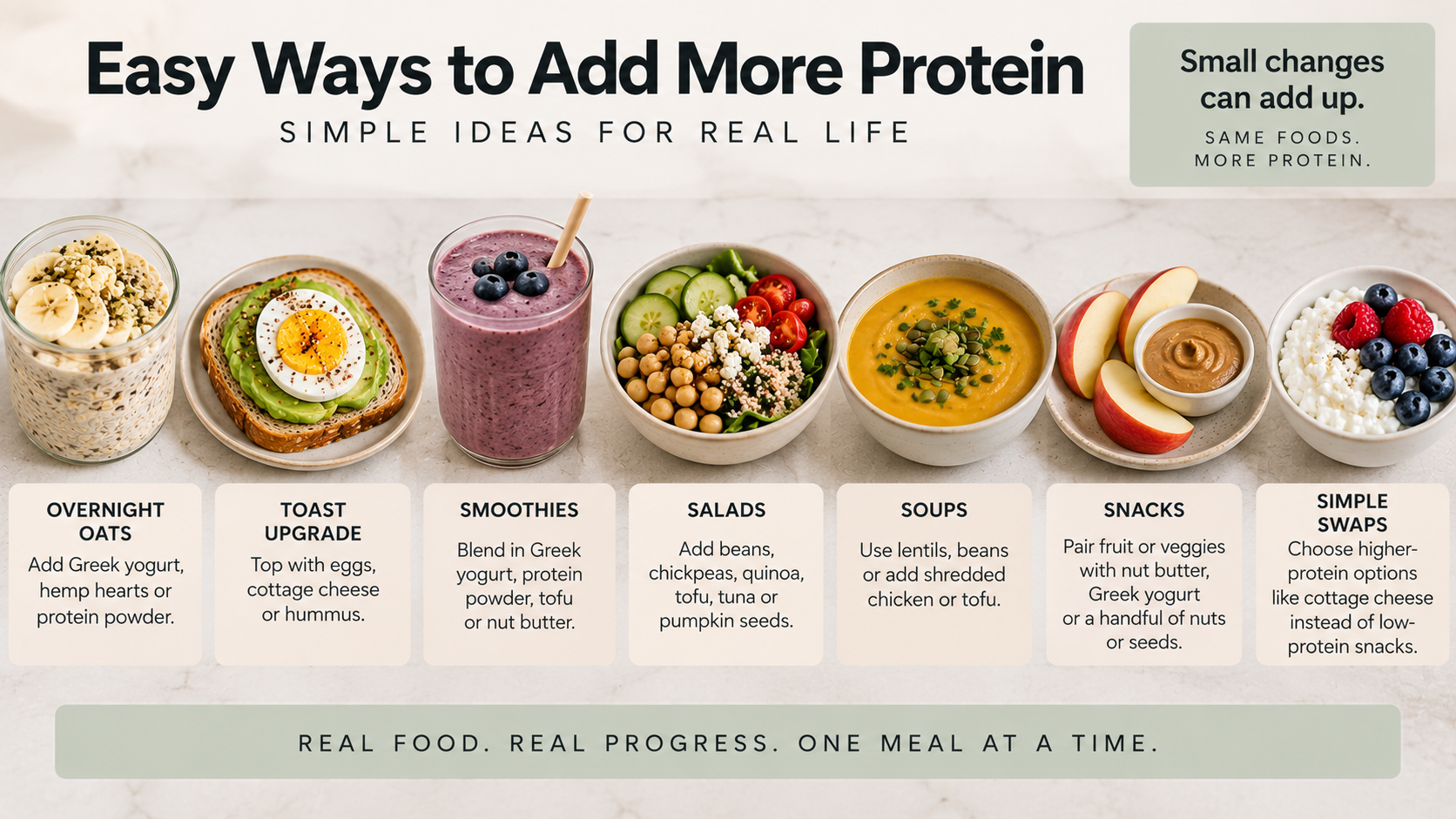
This is probably the easiest way to begin. Instead of downloading another tracking app and spending the next week counting grams, look at your meals and ask one question: where's my protein?
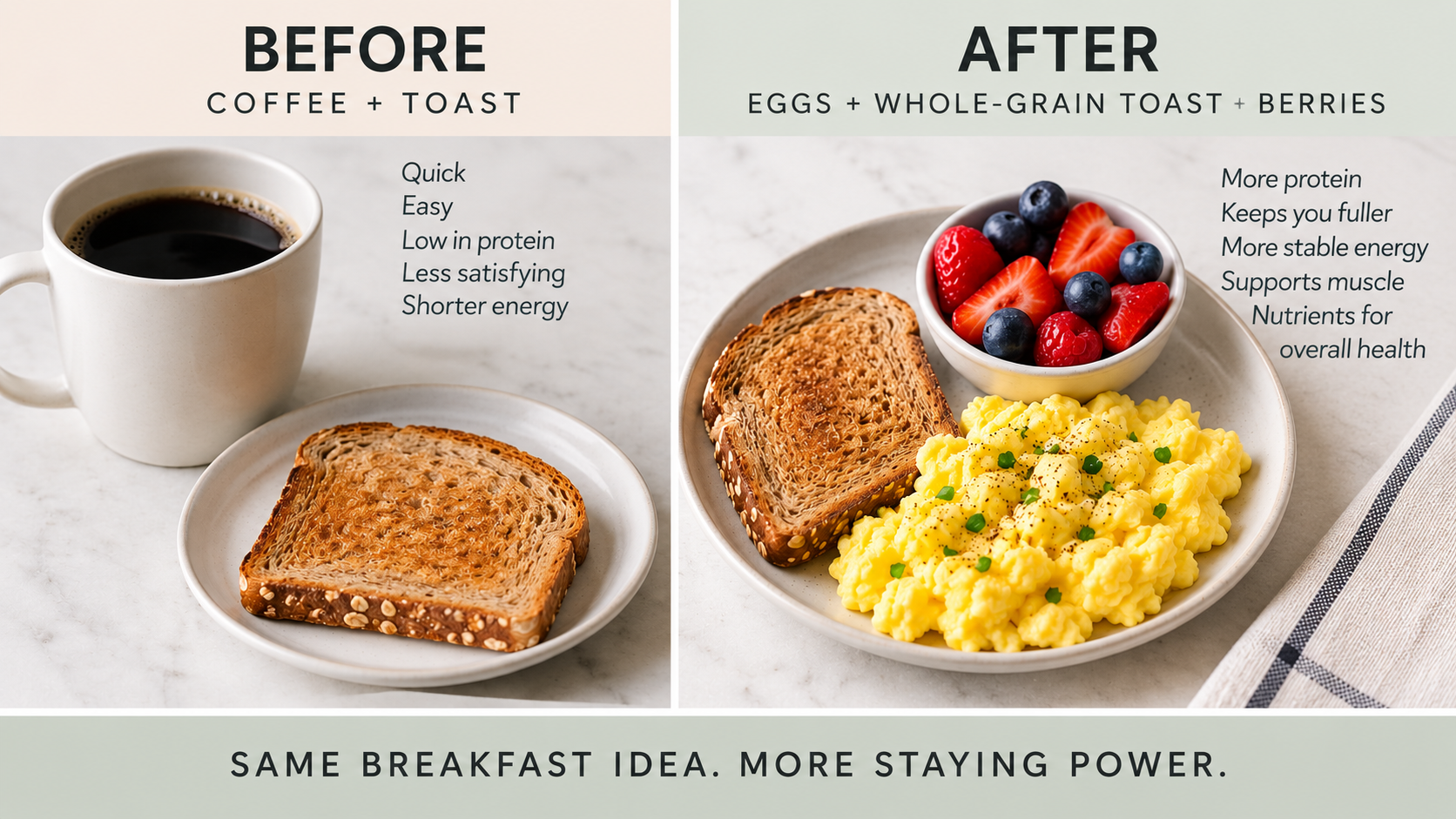
Maybe your breakfast right now is coffee and toast. You don't have to eliminate the toast — you could add eggs, Greek yogurt, cottage cheese, or tofu, and suddenly breakfast has a little more staying power. You're improving the meal without turning breakfast into a math problem.
Let's Talk About Lunch
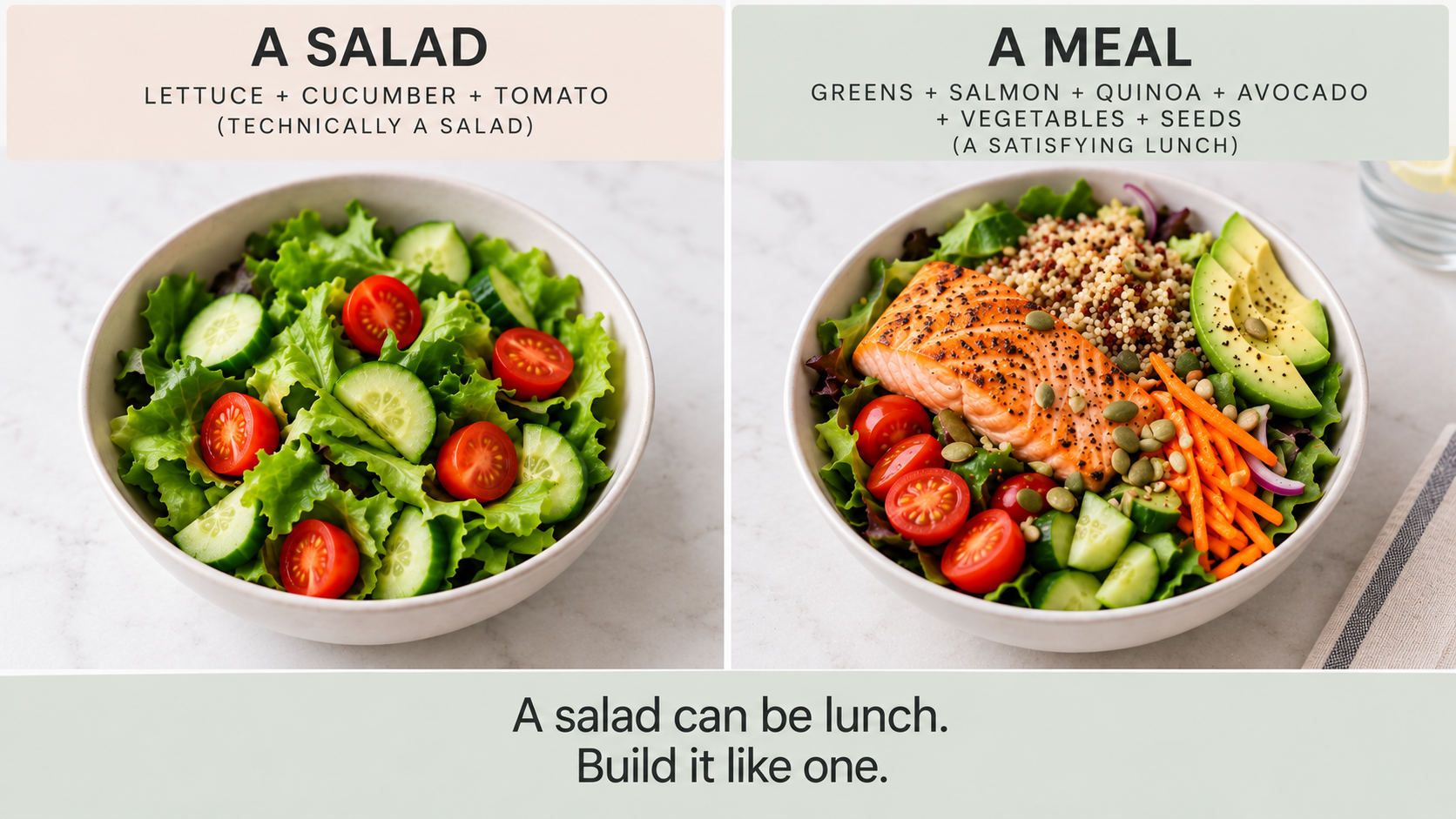
This is where many women accidentally eat much less than they realize. Breakfast was rushed, coffee carried you through the morning, and then lunch turns into lettuce, cucumber, tomatoes, and a little dressing. Technically, that's a salad — but depending on what's in it, it may not be much of a meal.
A salad can absolutely be lunch. Just build it like one: add salmon, tuna, chicken, eggs, lentils, chickpeas, beans, tofu, edamame, or quinoa combined with legumes, then round it out with some carbohydrates and healthy fats too. Now you're eating. Not dieting.
And Then 3 PM Arrives
You know where this is going. Suddenly you're tired, hungry, looking for something sweet. Coffee sounds good. Then coffee needs a cookie. And somehow the cookie brings a friend.
Then we blame willpower. But before asking, "why can't I control myself around sugar?" — it's worth asking what you actually ate earlier that day. Protein isn't a magic cure for cravings, and neither is breakfast. But meals containing protein alongside fiber, carbohydrates, and healthy fats tend to be more satisfying than trying to survive the day on coffee and tiny meals. Sometimes the 3 PM problem didn't start at 3 PM. It started hours earlier.
⸻
Protein Doesn't Mean Chicken Breast All Day
This is another thing I dislike about the protein conversation. Sometimes it sounds like eating after 40 should mean chicken breast, egg whites, protein shake, repeat. No thank you.
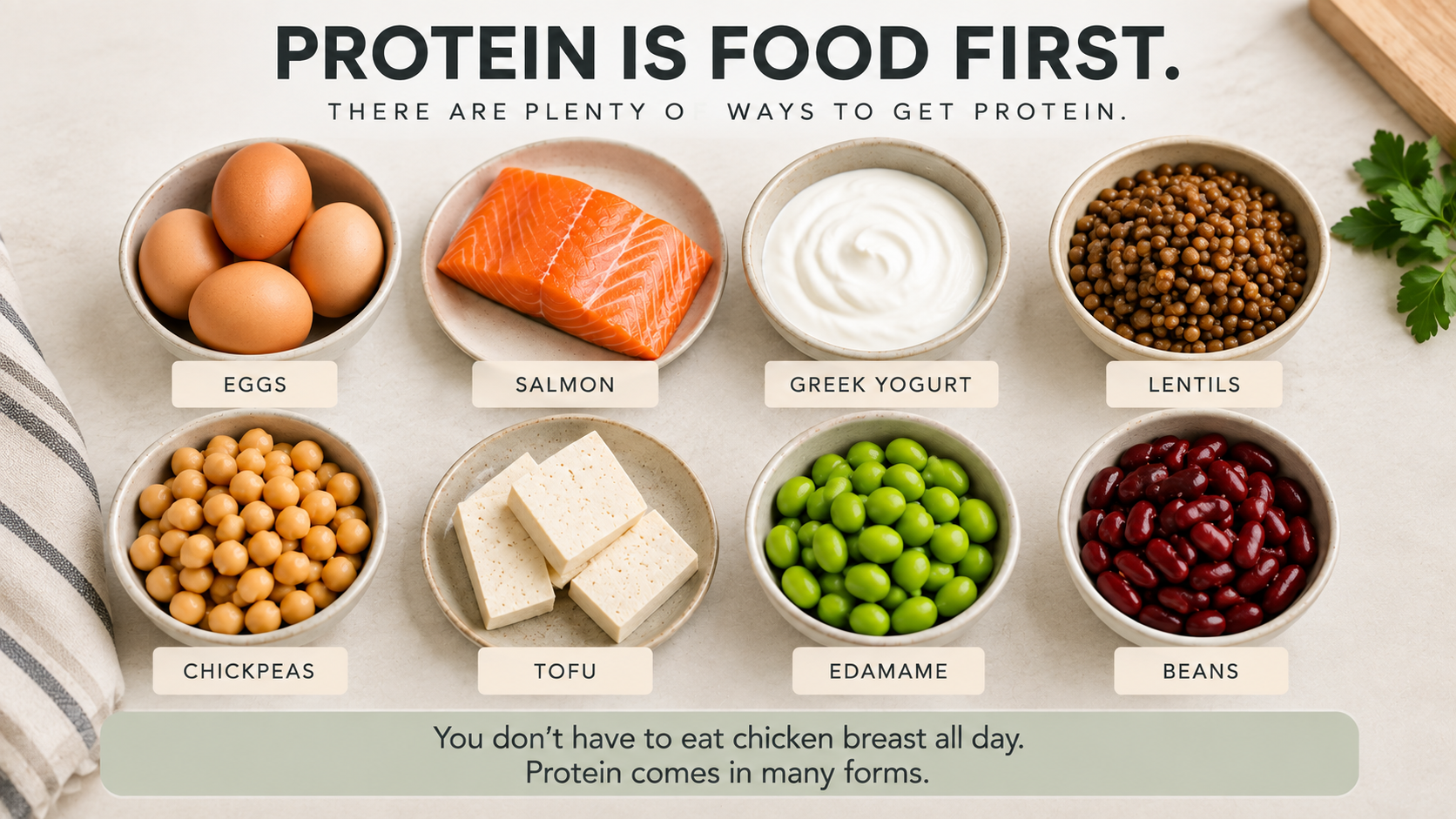
There are plenty of ways to get protein: eggs, Greek yogurt, cottage cheese, fish, chicken or turkey, beans, lentils, chickpeas, tofu, tempeh, edamame, milk, and soy milk — with nuts and seeds contributing some too. You can mix animal and plant sources, or eat predominantly plant-based. There isn't one perfect protein menu.
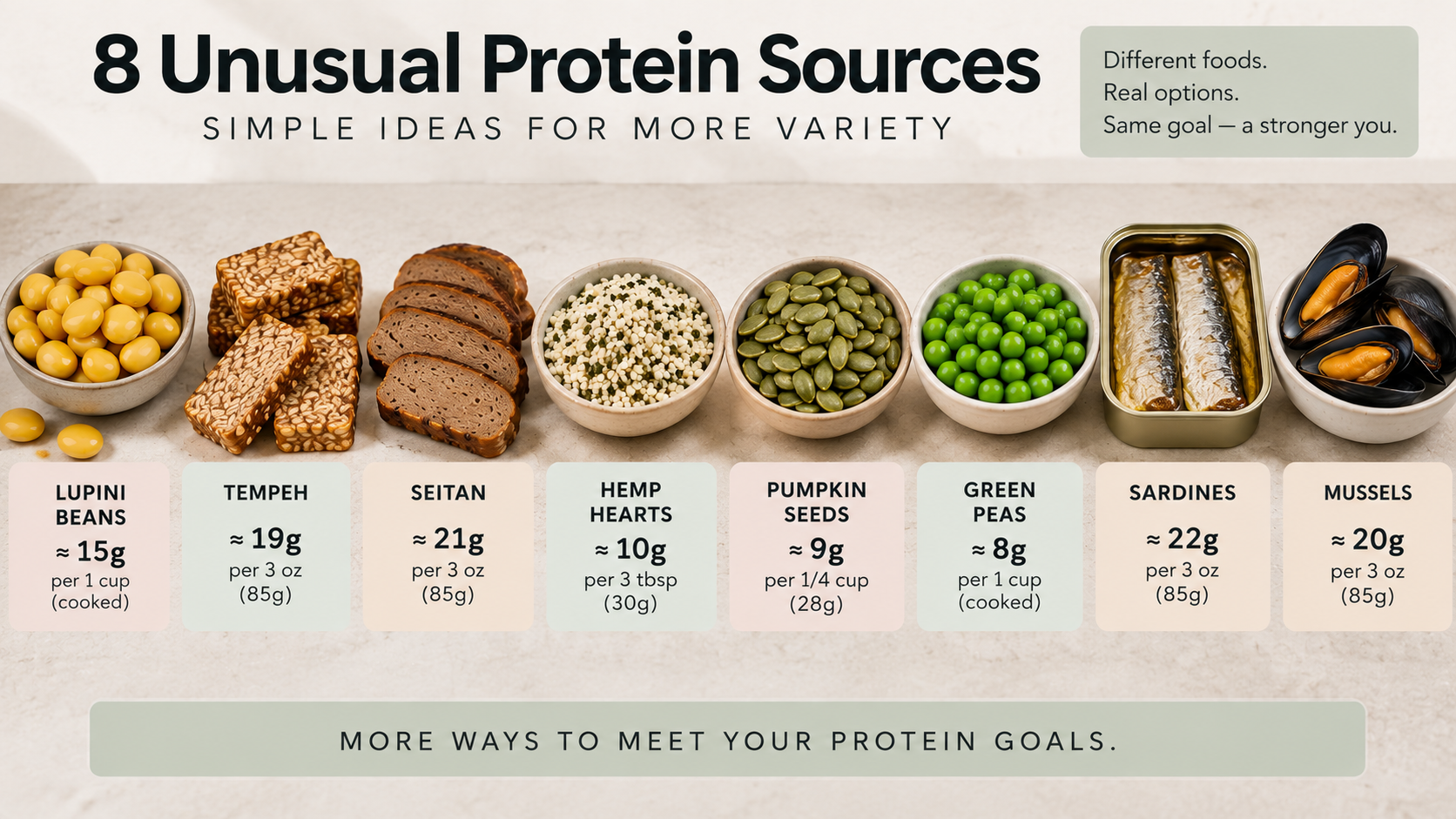
And some other Sources:
What About Protein Powder?
Protein powder can be incredibly convenient. Maybe you're running late, not hungry first thing in the morning, want something quick after exercise, or genuinely struggle to get enough protein from your regular meals. Great — use it.
But protein powder is a tool, not a requirement. We've reached a strange point where foods that naturally contain protein somehow don't feel "high protein" enough anymore. You don't need to turn every oatmeal, coffee, and muffin into a protein delivery system. Start with food, and use convenience products when they genuinely make your life easier.
⸻
What Could a Normal Day Actually Look Like?
Forget perfection for a second. Picture something like this:
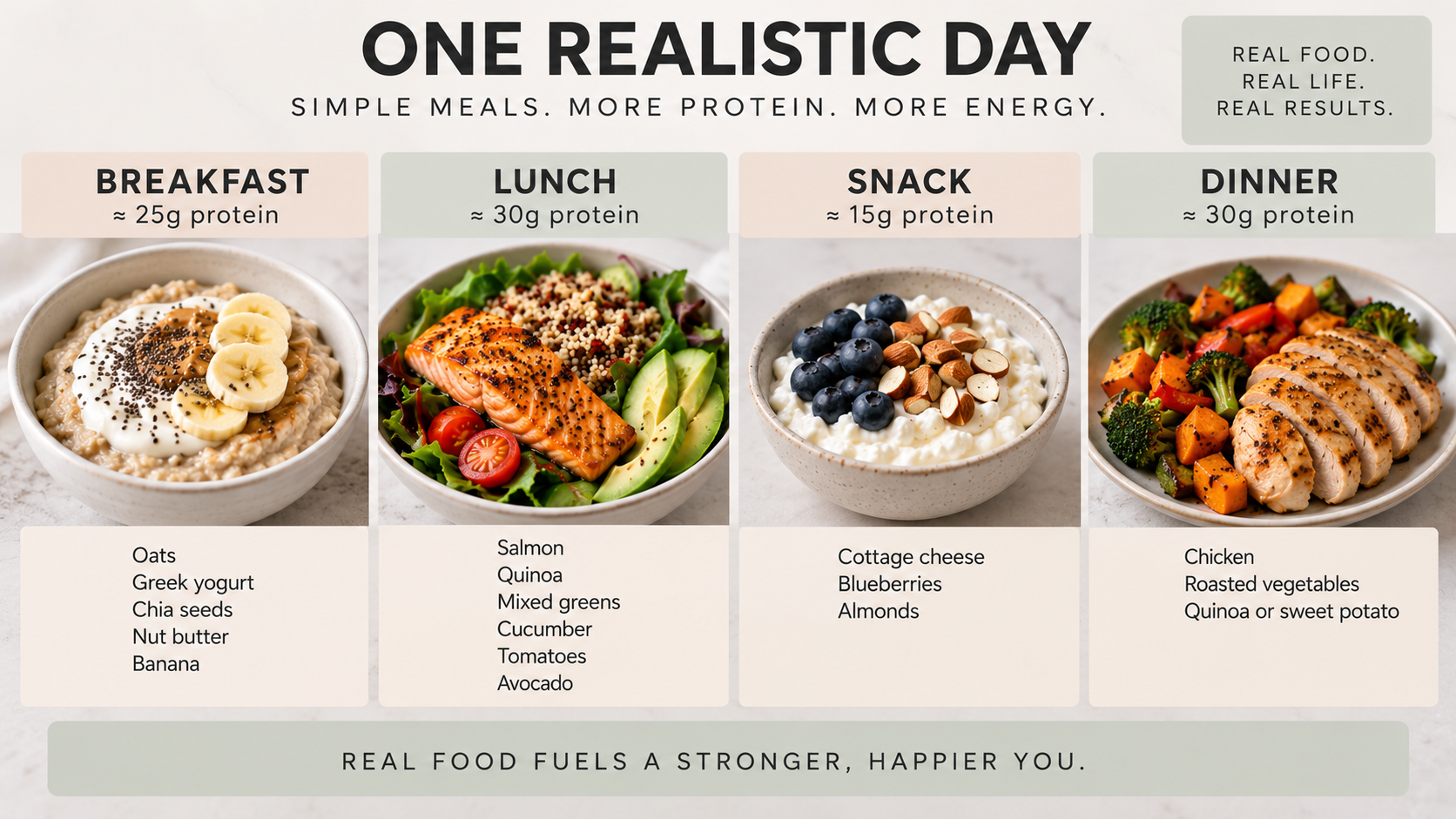
That's normal food. No food scale sitting on the kitchen counter, no calculator, no panic because you're four grams short. And tomorrow might look completely different. That's normal too.
And Sometimes More Protein Isn't the Answer
If you're exhausted all the time, losing strength, losing weight without trying, dealing with significant digestive problems, or struggling to eat enough food in general, the answer isn't necessarily another protein shake. There may be something else going on that deserves attention.
Protein is one part of nutrition. It doesn't replace carbohydrates, healthy fats, fiber, vitamins, or minerals — and it definitely doesn't replace eating enough food. Sometimes women get so focused on hitting a protein target that eating becomes another job. And isn't that exactly what we're trying to get away from?
Please Don't Turn Protein Into Another Diet
Women have spent decades being handed numbers. Calories. Carbs. Fat grams. Points. Steps. Pounds. Now we've been handed another one: protein grams. And suddenly breakfast becomes another test we can fail. That's not what I want for us.
Protein matters, but you don't need to eat perfectly to benefit from eating better. So before downloading another app, try something much simpler for one week. At breakfast, lunch, and dinner, just ask: where's my protein? Then look at everything else — vegetables, fruit, whole grains, potatoes, healthy fats, and foods you actually enjoy. We're building meals here. We're not collecting protein points.
⸻
Maybe We're Asking the Wrong Question
For years, the question a lot of us asked was: how do I make my body smaller? Maybe after 40, there's a better question: how do I keep my body strong? Strong enough to carry the groceries. Strong enough to travel. Strong enough to get down on the floor and back up again. Strong enough to live independently decades from now.
Protein can help protect that future. So can movement, strength training, eating enough, and sleeping — and none of it needs to be done perfectly. You don't have to eat like a bodybuilder because you turned 40. You don't need protein powder in everything. And you don't need to spend your day chasing a number.
Start with your plate. Think addition before calculation. Build from there.
Maria
BananaMamaLife ♡ Build a lifestyle, not a diet.
⸻
Health note: Protein needs vary based on age, body size, activity level, overall diet, and health. Certain medical conditions, including kidney disease, can change how much protein is appropriate. If you're unsure about your individual needs, discuss them with your healthcare professional or a registered dietitian.