

Eating Iron-Rich Foods but Still Exhausted? You May Not Be Absorbing as Much Iron as You Think
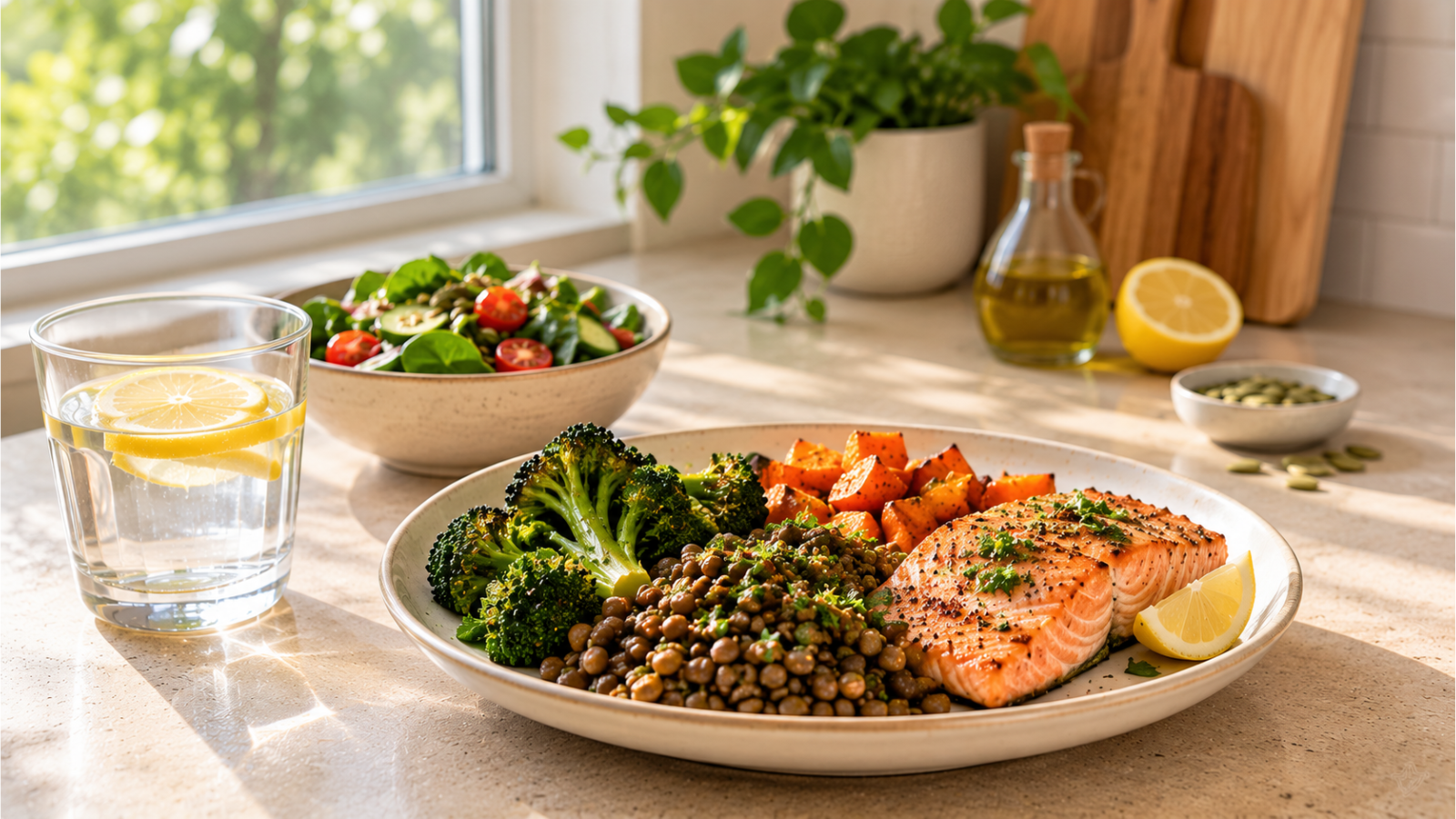
You're doing everything "right." Spinach in your smoothie. Lentils in your soup. Maybe even an iron supplement sitting on your counter. And yet — the exhaustion doesn't budge.
Here's the part most people never hear: eating iron and absorbing iron are two completely different things. And for a lot of women, the gap between the two is bigger than they realize.
It's Not Always About How Much Iron You Eat
Iron deficiency isn't only a "not eating enough" problem. It's often an absorption problem — your body may be taking in far less of that iron than the meal suggests. A few things that can get in the way:
Coffee and tea — the compounds in both can reduce absorption of non-heme iron (the type found in plant foods) when consumed with or close to a meal. The exact effect varies depending on the drink, the meal, and timing, but the pattern is real enough to be worth adjusting for.
Calcium — taking a calcium supplement or having a calcium-rich food alongside your iron-rich meal can reduce iron absorption in that meal. The long-term impact is more complicated and depends on your overall diet, but separating the two is a simple, low-cost habit to build.
Reduced stomach acid — this can make it harder to absorb iron from food, and it's more common with certain medications (like acid reflux medications) or health conditions. It's not something that automatically happens after a certain age, but it's worth knowing about if you're dealing with unexplained fatigue.
The Piece Almost No One Talks About: Inflammation
This one deserves its own spotlight, because it explains something confusing: why some women feel exhausted even when their labs come back "normal."
Inflammation in the body can raise a hormone called hepcidin, which regulates how iron is absorbed from food and released from your body's storage. When hepcidin is elevated, your body can hold iron in storage and restrict how much gets released for actual use — even if your ferritin (stored iron) number looks fine or even elevated on a lab report.
In other words: the iron might technically be "there," but your body isn't able to access and use it the way it needs to. This is one reason iron issues can be so easy to miss, and why context matters more than a single number.
Why This Often Shows Up Around Perimenopause
Here's a more accurate version of a common story: years of heavy or irregular periods during your 30s and 40s can gradually deplete iron stores, often without anyone noticing until fatigue becomes hard to ignore. By the time perimenopause hits, some women are already running on low reserves.
After menopause, daily iron needs actually tend to decrease, since menstrual blood loss stops. So if fatigue continues or shows up after menopause, iron may not be the main driver — it's worth looking at other causes too (more on that below).
Low Iron or Just Tired? A Few Signs Worth Noticing
It can be genuinely hard to tell "normal busy-life tired" from low iron. A few signs worth paying attention to:
Exhaustion that doesn't improve with sleep
Cold hands and feet more often than usual
Brittle nails or noticeable hair shedding
Difficulty concentrating or "brain fog"
Feeling out of breath doing things that used to be easy
Unusually pale skin
If several of these sound familiar, it's worth bringing them up with your doctor and asking whether ferritin and iron studies make sense for you. Ferritin is a genuinely useful marker, but because it can rise with inflammation, it's best interpreted with the full picture — not as a single number in isolation.
Simple Ways to Support Iron Absorption
Pair iron-rich foods with vitamin C (think: spinach with lemon juice, lentils with tomatoes, or citrus alongside an iron-rich meal) — this can meaningfully boost absorption of non-heme iron.
Try spacing coffee and tea away from meals rather than having them together.
If you take a calcium supplement, consider taking it at a different time of day than your main iron-rich meals.
Cooking in cast iron cookware can add a small amount of usable iron to food, though how much varies depending on the food, its acidity, and cooking time.
One Important Caveat
Persistent exhaustion shouldn't automatically be chalked up to iron. Thyroid issues, B12 or folate deficiency, poor sleep, certain medications, depression, and cardiovascular issues can all produce similar symptoms. If fatigue is significant or ongoing, it's worth a broader conversation with your doctor rather than assuming iron is the whole story.
The Bottom Line
If you're eating well and still running on empty, it might not be a "try harder" problem — it might be an absorption problem, an inflammation problem, or something else entirely. Understanding how your body uses iron, not just how much you're eating, is often the missing piece — and it's worth figuring out with real information rather than guesswork.
One More Thing Before You Go
If you’ve been doing all the “right” things and still wondering why you’re exhausted, hungry by 3 PM, or running on coffee just to get through the day, there may be more to the story than willpower.
That’s exactly what I write about here.
Small things that affect how we feel after 40 — breakfast, coffee, iron, cravings, sleep, movement, and the everyday habits we rarely stop to question.
No perfect routines. No starting your whole life over on Monday.
Just practical information to help you understand your body a little better and make changes that actually fit your life.
Want the next BananaMamaLife post in your inbox?
Subscribe below and I’ll send you new articles, practical tips, and occasional free resources created for women 40+.
→ Join BananaMamaLife ♡
Because feeling better sometimes starts with understanding what your body has been trying to tell you.