

I Never Counted Calories. Then a Hospital Dinner Changed How I Think About Food.
I've never been someone who counts calories.
Honestly, I never wanted to.
Food already comes with enough rules, and I didn't want every meal to feel like a math problem. I wanted to enjoy eating without wondering whether every bite fit into some daily limit.
But a few years ago, early in my weight-loss journey, I hit a point where nothing seemed to make sense anymore.
What had worked for me in my thirties wasn't working now.
Early menopause had changed my body in ways I wasn't expecting. I was constantly tired, my energy was low, and even though I felt like I was making healthy choices, the scale barely moved.
I wasn't looking for another diet.
I just wanted to understand what was happening.
Then something completely unexpected happened.
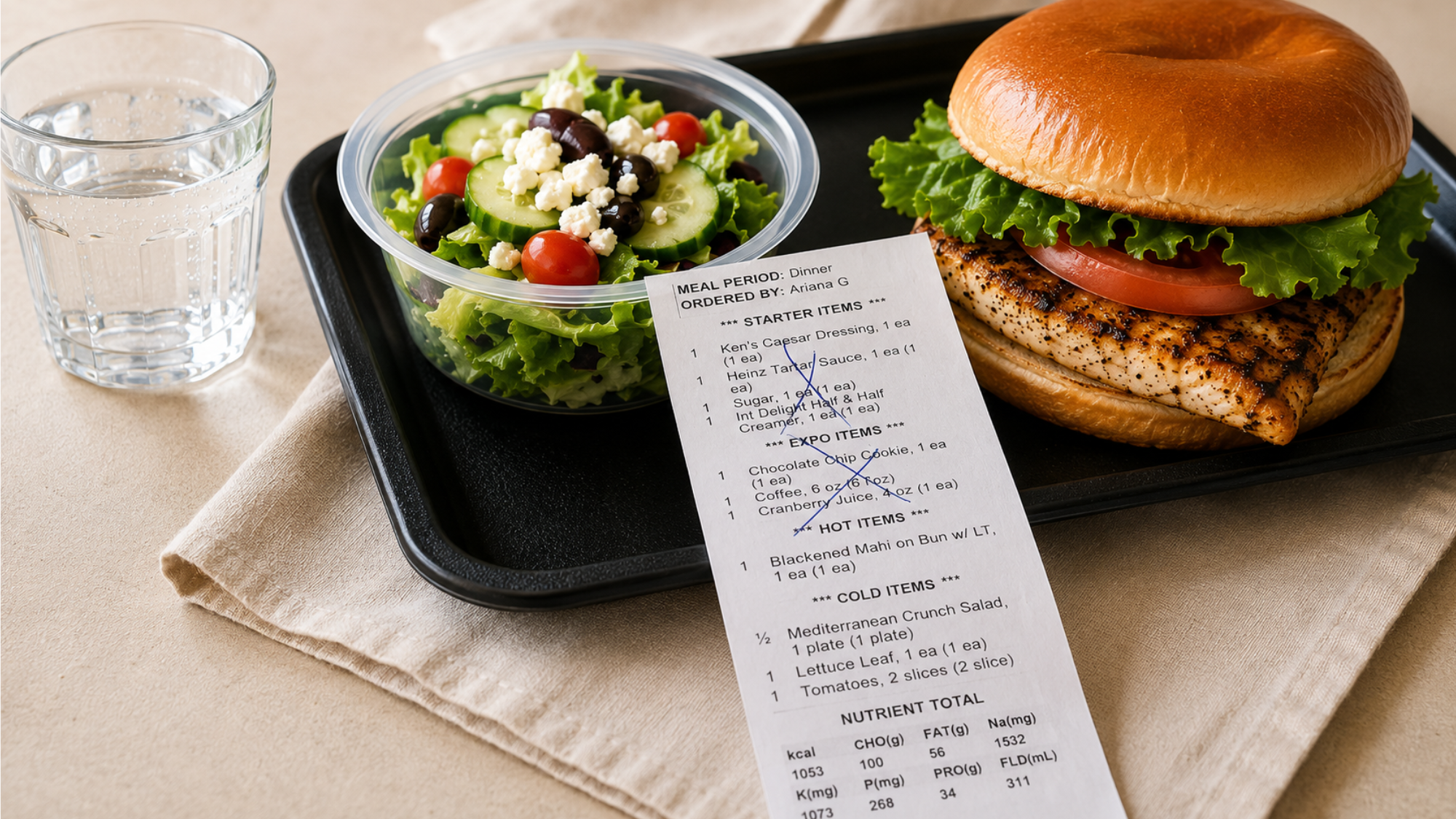
During a short hospital stay, I ordered dinner.
I had no idea that one ordinary meal would completely change the way I looked at food.
The Dinner That Made Me Stop
When the tray arrived, I didn't think much of it.
A blackened mahi sandwich on a brioche bun.
A small Mediterranean crunch salad.
A glass of water.
Honestly, it looked like one of the healthier meals I could have picked.
Then I noticed the nutrition receipt attached to the tray.
1,053 calories.
I remember staring at it for a second, convinced it had to be wrong.
How could this meal have over a thousand calories?
It wasn't fried.
It wasn't covered in cheese.
It didn't even come with fries.
Curiosity got the better of me, so I started reading through the receipt.
The fish wasn't the problem.
The lettuce and tomato weren't either.
Even the salad itself looked perfectly reasonable.
What surprised me were all the little extras.
The Caesar dressing alone added more than 200 calories.
The tartar sauce added more than I expected.
Even the brioche bun contained far more calories than I would have guessed.
That's when it hit me.
I wasn't eating huge portions.
I was eating lots of little extras that quietly added up without me ever noticing.
And I remember thinking,
"No wonder so many of us struggle. We don't even realize where some of these calories are hiding."
It Wasn't About Counting Calories
That hospital dinner didn't suddenly turn me into someone who tracks every calorie.
I still don't.
What it changed was something much more important.
It made me pay attention.
Instead of automatically adding dressing, grabbing a sauce packet, or pouring another sweet coffee, I started asking myself one simple question before I ate.
"Is this actually giving my body what it needs right now?"
That question changed everything.
Not overnight.
But little by little.
Why Everything Felt Harder After 40
If you're over 40, you might know exactly what I'm talking about.
The meals that used to keep you full suddenly don't.
You finish lunch, and an hour later you're standing in front of the pantry wondering what else you can eat.
Some afternoons you feel exhausted for no obvious reason.
Other days you crave sugar even though you've already eaten.
For a long time I blamed myself.
I honestly thought I just needed more discipline.
But as I learned more about early menopause, hormones, stress, sleep, and how our bodies change with age, everything finally started making sense.
There wasn't one thing working against me.
It was a combination of small changes happening inside my body.
Once I stopped expecting my 44-year-old body to behave like my 25-year-old body, I started approaching food differently.
Not with fear.
With curiosity.
Small Changes Added Up
Looking back, I know that hospital dinner didn't magically make me lose weight.
But it opened my eyes.
Instead of trying to eat less, I started trying to eat better.
I looked for meals with enough protein to actually keep me full. I paid more attention to fiber, iron, and foods that gave me steady energy instead of leaving me hungry an hour later.
I didn't clean out my pantry.
I didn't swear off bread.
I didn't promise myself I'd never eat dressing again.
I simply started making small changes that felt realistic.
Sometimes I chose a lighter dressing. Other times I mixed plain Greek yogurt with herbs instead of reaching for tartar sauce. I also realized that when I built my meals around protein, I wasn't constantly searching for snacks later in the day.
None of those changes felt life-changing at the time.
But after a few weeks, I noticed something.
I wasn't thinking about food all day anymore.
The afternoon crashes weren't happening as often.
I wasn't reaching for another cup of coffee just to get through the day.
Little by little, I started feeling like myself again.
Over time, those small habits helped me lose more than 20 pounds.
Not because I counted calories.
Because I finally started giving my body what it actually needed.
Work With Your Body, Not Against It
Looking back, I'm grateful for that hospital dinner.
Not because it taught me to count calories.
It didn't.
It taught me to slow down.
To notice.
To understand that sometimes it's the little things—not the obvious ones—that quietly shape our health.
Today I still don't count calories.
I probably never will.
But I do pay attention.
And for me, that simple shift has been far more powerful than any diet I've ever tried.
If you're navigating perimenopause or post-menopause and wondering why your body suddenly feels different, please know you're not alone.
That's exactly why I created the Summer Reset.
It isn't another restrictive diet.
It's a gentle guide to help you rebuild your energy, create habits that last, and learn how to support your body instead of fighting against it.
Because after 40, I don't think we need stricter rules.
I think we need more understanding.
Sometimes one small moment—a hospital dinner, a receipt, or a simple question—is enough to change the way we see food forever.
Join the BananaMamaLife Community
If this story resonated with you, I'd love to welcome you to the BananaMamaLife community.
Every week I share simple recipes, realistic wellness tips, encouragement, and honest conversations about life after 40.
No guilt.
No perfection.
No crash diets.
Just small habits that help you feel more like yourself again.
Because together we're building a lifestyle—not another diet.